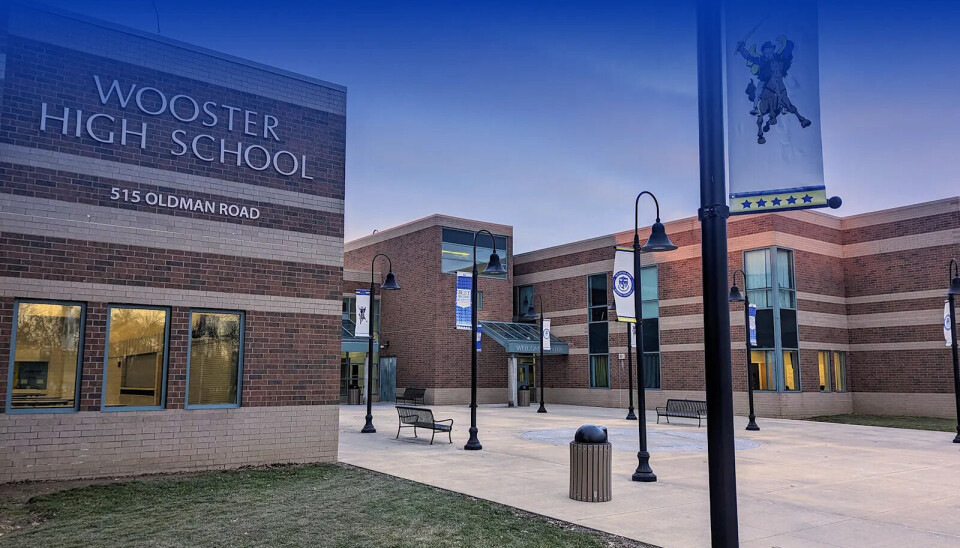
Wooster board hears concerns on modular classrooms
Residents question modular plans, officials consider next steps
Residents raised concerns about modular classrooms and school closures during the April 21 Wooster City Schools board meeting, prompting officials to consider next steps for facilities planning.
Wooster City Schools
While the future of facilities wasn’t on the agenda, it was a big part of the April 21 Wooster City Schools Board of Education regular meeting.
Comments from two residents (Ted C. Hill and Connie Storck) were read, and another (Gail Guzzo) spoke during public participation on nonagenda items.
Their comments were in response to the board’s decision to not pursue a bond issue at this time and consider modular units as a facilities solution after an in-depth work session April 8.
In response to the three residents’ comments at the end of the meeting, WCS Superintendent Gabe Tudor told the board members that he hoped to have some recommendations for them to consider at the next meeting May 9.
“I am working on different configurations on how we could address our plans moving forward and where we would place the modulars,” Tudor said. “There are just lots of things to think about, from the logistics of where things can go and where they can fit, and how that impacts where staff and students go. We will continue to work through that.”
Not wanting modulars was the main thing the three residents’ comments had in common, expressing safety issues with them, not withstanding tornadoes or straight-line winds, as well as an intruder intent on causing harm.
“Please reconsider this approach of modular trailers,” Guzzo said. “It reads as a punishment for the two previous failed levies and, at best, an expensive temporary Band-Aid.
“At what time after conducting the recent $29,000 survey did you hear from the community that they are in favor of educating their children in trailers?” Guzzo also asked the board members. “I attended two in-person surveys. Not one person mentioned anything about that. I’m wondering where that solution came from.”
Guzzo ended by saying that it seemed like in the past many decisions concerning Wooster City Schools have been made with minds already made up.
“My perception could be right or could be wrong,” he said, “but I’m not the only person with that perception.”
The proposal of closing the more-than-100-year-old Cornerstone Elementary School building was another thing the three residents agreed wasn’t a good option.
“If one school is closed, how are the remaining three elementary schools going to absorb the sudden jump in population with their gyms and cafeterias already at peak loads?” were some of Storck’s comments that were read, which also brought up how much harder it will be to attract new businesses to Wooster with trailers on elementary school campuses because they are eyesores.
“There are options, including adding to or repairing the current structures we already have,” concluded the reading of Storck’s comments. “There are long-term solutions better for both students and the community.”
If modulars must be the path forward, Hill’s comments asked for more discussion on modular placement and grades hosted in them.
Hill’s comments did mention that there have been few complaints about the modulars now at Kean Elementary and that he appreciated the board considering community feedback by not putting a levy on the ballot in the spring, only considering going to voters in November and choosing not to bypass voters by taking out a loan.
“I believe the board is earnestly trying to rebuild community trust,” Hill wrote.
The meeting actually did have quite a few items on the agenda, mostly procedural ones like personnel, overnight trips and financial reports.
The board voted in favor of the district’s guidelines on artificial intelligence.
Molly Richard, director of instruction and curriculum, and Diana McMillen, student services director, gave a presentation on the 2026-2029 District One Plan, a systemic consolidated planning tool aligned to funding and resources, as well as focused on improving outcomes for all students.
There also were the usual student recognitions at the beginning of the meeting, as well as recognition of the Wooster High School girls varsity bowling team qualifying for the program’s first state tournament.