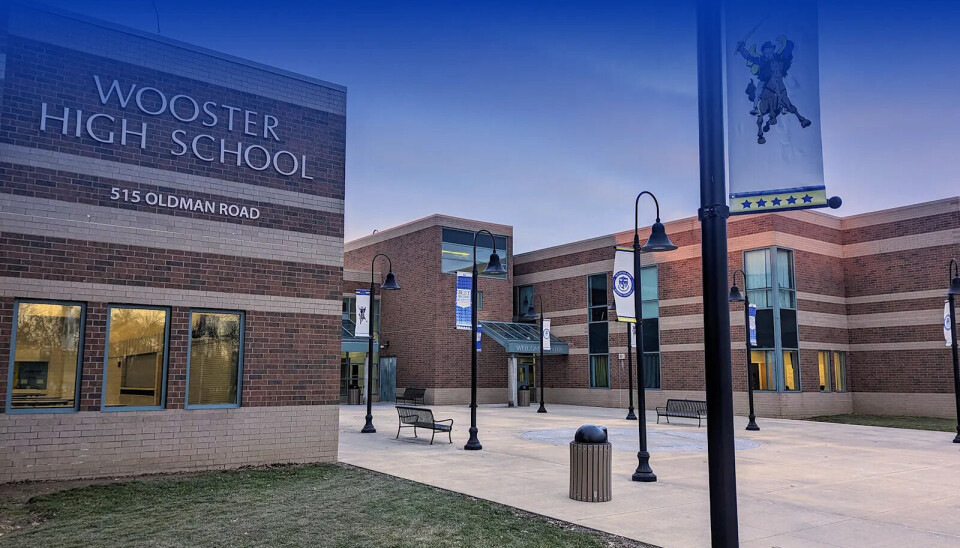
Wooster school board to discuss levy at work session
Board to examine potential K-5 school levy at April 8 work session amid community debate
Wooster City Schools officials will hold an April 8 work session to explore a potential K-5 building levy, weighing community input, costs, site options and contingency plans before deciding whether to place a bond issue on the November ballot.Wooster City Schools
Jarred OpatzJarredOpatzWooster Weekly News
Published
AD
Wooster City Schools Board of Education members will discuss the possibility of a levy for a K-5 elementary school building at a 5 p.m. work session Wednesday, April 8.
The board scheduled the work session during its Tuesday, March 17, regular meeting after approving a resolution to consider placing a bond issue on the November ballot at the April 21 regular meeting.
AD
“This is not one of the two required resolutions to be on the ballot for an election,” said Superintendent Gabe Tudor, later adding about the work session that “it’s open to the public but is less formal. It would really let us dive in (because) there are multiple things we need to think about.”
During public participation on agenda items, statements read aloud submitted from two community members gave the board members differing views to consider before the work session.
“Our children, grandchildren and great-grandchildren need the adults of our community to give them safe and excellent schools; our teachers deserve this too,” the first statement read. “We cannot turn Cornerstone into a school for the year 2026 and beyond. Those of us who own or have owned 50- to 60-year-old homes know how much money and work is required to update them and make them safe. We need a new elementary school building.”
“I would advise the board against this action for two reasons,” the other one started. “The public has already rejected similar levies in the previous two elections. Clearly, these levies are not desired by the Wooster community, and two, nearly 80% of property taxes go to Wooster City Schools, resulting in a bill of thousands of dollars a year for the average property owner. This is already a huge financial burden for many families, and an additional levy will pose even more costs on already struggling families.”
What to do if the board decides to pursue a levy and it fails is one of the most significant things the board needs to talk about at the work session, Tudor said.
“I really think if we do go forward with a bond resolution in April or May, I believe the community is going to want to know what that Plan B is so they can make the most informed decision,” he said.
AD
One Plan B, though, that Tudor emphasized the board shouldn’t consider is the status quo with the school district’s aging buildings, especially Cornerstone, which needs significant maintenance and repairs if it is going to be used long-term.
Earlier in the meeting, the board approved motions for maintenance updates with the replacement of a leaky roof at Parkview Elementary School and new bleachers at the high school.
Deciding what kind of tax levy — property, income or a combination — is another important topic Tudor said needs to be discussed, as well as the location of a new elementary building if a levy would pass.
“I want to give you as much information as we can about site selection,” Tudor said. “We think we can put it on the south or north side of Oldman (Road). There is still some discussion with our architect firm that I would like to share with you.”
President Jody Starcher said a work session will be really helpful to talk about a timeline and put all the pieces together for a possible levy so the board can move “forward with a consistent message and understanding in the community.”