Wooster police chief marks recovery one year after brain hemorrhage
One year after a near-fatal brain hemorrhage, Chief Matt Fisher reflects on resilience and gratitude.
One year after suffering a life-threatening subarachnoid hemorrhage that left his survival and recovery in doubt, Wooster Police Chief Matt Fisher, third from left, has returned to full duty, reflecting on resilience and deep gratitude for those who helped save his life.Submitted
The question of “Why me?” works in multiple directions. Most use it after something bad happens. For Wooster Chief of Police Matt Fisher, it’s been the opposite.
After Fisher was felled last Feb. 25 by a subarachnoid hemorrhage, things looked bleak. His condition was one that for many would have been lethal. A typical outcome ranged from a full recovery to some sort of permanent brain damage or the worst possible scenarios.
AD
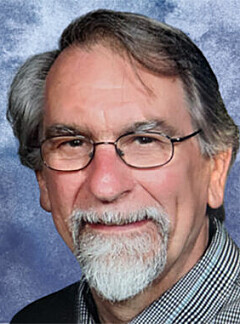
Matt FisherSubmitted
“What they told my wife (Beth) was basically, ‘Don’t expect too much if he even survives,’” Fisher said. “People that have subarachnoid hemorrhages, 60% don’t make it to the hospital, 30% make it but don’t make it all the way back, 30% have speech problems. The percentage of people that go back to work is very low.”
A year later Fisher is closing in on 100% normalcy. There are still steps to be taken, but to the naked eye, he probably seems to most like nothing ever happened. And while he doesn’t know “why him,” as far as his positive outcome scale, he wants to make sure everyone knows exactly how grateful he is as a result.
Suddenly, those day-to-day things people take for granted came into a little sharper focus — things like mundane chores or even driving a car.
“You don’t realize how much you miss doing that stuff until you can’t do it,” Fisher said.
Last Feb. 25 was a normal winter day for Fisher — until it wasn’t.
As he thinks back, he endured some symptoms prior to what he calls his brain explosion. He dealt with some minor headaches, which over-the-counter medication took care of. He experienced some neck stiffness and bouts of double vision. Individually, none was a big deal; together, a disaster was brewing.
AD
Fisher was in his car that day when he started feeling, as he puts it, “the walls closing in.” He pulled over, put his car in park and radioed for help. The first to get there was Assistant Fire Chief Scott Kiper, who happened to be driving nearby.
After being life-flighted to Ohio State University’s Wexner Medical Center, Matt Fisher spent weeks unconscious and months hospitalized, enduring seizures, mini-strokes, additional surgery and intensive care, with little memory of the ordeal.Submitted
Kiper, Fisher said, diagnosed on the scene what was happening. He notified the paramedics, who took the chief straight to CT at Wooster Community Hospital. Before the day was over, Fisher was unconscious, and he still has no memory of the next 60 days or so.
“Immediately following the incident, we spent many weeks simply worrying about whether or not Chief Fisher would survive,” Wooster Mayor Bob Reynolds said. “After a few months, the focus shifted to worries about his quality of life going forward. His returning to work was not even a consideration at that point.”
It didn’t become a consideration for a while, either. In the immediate aftermath, Fisher was life-flighted to Ohio State University’s Wexner Medical Center and immediately had a seizure that medical personnel thought would be fatal.
Fisher, initially unconscious for several days, was at OSU for a month or so when doctors were ready to send him home. A nurse there had other ideas. Sensing something was amiss, the nurse stopped the discharge.
“She put her foot down and said, ‘You can’t release him; there’s something going on,’” Fisher said.
The next day Fisher had what he said were several mini strokes. That led to further surgery and another two weeks in intensive care. Another month passed before he was sent home again.
The entire time, Fisher really had no idea what was going on. He was often coherent enough to be told, but in a sort of “Fifty First Dates” scenario, he had to be told repeatedly because he never remembered what was going on.
Not knowing why he was in a hospital connected to all kinds of machines and wires did not sit well.
“I was not a good patient,” Fisher said. “I pulled every line out at one point including the one that was into my brain. I don’t have a specific memory of them telling me what was happening, but they told me multiple times.”
Once home, Fisher couldn’t walk without someone’s help. He had lost 35 pounds and was understandably weak. He hit the rehab trail fast and worked hard.
Mentally, though, he was struggling. Beth Fisher, a speech therapist, had told him he often was choosing incorrect words for certain situations or struggling to find words at all.
Then one day a switch flipped. Nobody knows why, least of all Fisher, but it did. Just like that, his brain came back, and those problems were gone.
In fact, most of his issues were going away, and as of now, most have corrected. Most were gone by last August. Exactly six months after being stricken, Fisher was back working full-time. Now, with another six months behind him, the chief seems almost no worse for wear.
“Am I better than before? I will tell you that’s an interesting question,” Fisher said. “I think I have a greater respect for the word resilience. A lot of people say that word and maybe don’t grasp what it truly means.”
After returning home, Matt Fisher had to relearn basic tasks like walking and speaking, losing 35 pounds and struggling with weakness and word-finding issues before gradually regaining his strength and cognitive abilities.Submitted
The other word Fisher has repeated a lot over the past year is gratitude. He has gone back to the places where medical professionals treated him, from ICUs to therapists. He’s gone back to thank as many individuals as he could find who played a role in his recovery.
“That’s powerful to me,” he said. “That’s like police work. That’s what they pay you for, but you get taken for granted a little bit.”
Fisher still sees all sorts of doctors, has checkups, angiograms and other tests to make sure all systems are functioning as they should. Some of his recovery included reading countless cards and emails from well-wishers, all of which brought a smile to a face that for a while couldn’t produce one.
“I’m grateful,” he said, “grateful for the people around me. That’s one of the things throughout this experience. You go through something like that, you realize how big your village is. I’m blessed that my village is this big.”